
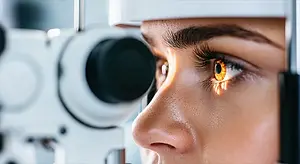
If you already have an eyeglass prescription, you may wonder why you need another exam before ordering contacts. The short answer is that glasses and contact lenses do not sit in the same place. Glasses rest in front of your eyes, while contacts sit directly on the tear film covering your corneas. That means their fit, material, shape, and movement all matter.
A comprehensive eye exam remains an important part of protecting your vision and eye health. A contact lens exam adds the measurements and fitting steps needed to determine whether a particular lens is suitable for your eyes.
What Does a Regular Eye Exam Check?
During a regular eye exam, your optometrist evaluates how clearly you see, checks your glasses prescription, assesses how your eyes work together, and examines your overall eye health. The visit may also include screening for eye diseases and a discussion of symptoms, medical history, medications, and visual demands.
Those findings create the foundation for contact lens wear. However, an eyeglass prescription alone does not provide all the information needed to select contact lenses safely.
What Is Added During a Contact Lens Exam?
A contact lens exam looks at how a lens will interact with the front surface of your eye. Depending on your needs, the evaluation may include:
- Corneal measurements: The doctor assesses the curve and shape of the cornea to help choose an appropriate lens design and fit.
- Tear film and eye surface evaluation: Tear quality can affect comfort, clarity, and how long lenses feel wearable.
- Lens position and movement: A trial lens may be placed on your eye so the doctor can see whether it centres and moves appropriately when you blink.
- Vision testing with the lenses: The power may be adjusted based on how you see through the lenses in real-world conditions.
- Lifestyle review: Screen time, work, sports, allergies, wearing schedule, and convenience preferences can influence the recommendation.
These details help your doctor recommend suitable contact lens options, which may include daily disposables, multifocal contacts, or customized lenses for more complex needs.
Why Your Contact Lens Prescription Is Different
A contact lens prescription may differ from an eyeglass prescription because the lens rests on the eye instead of sitting several millimetres away. It also includes lens-specific details such as the brand or material, base curve, and diameter. These details describe both the corrective power and the lens that was evaluated on your eyes.
Contact lenses are medical devices, so they are not one-size-fits-all. Two lenses with the same power can differ in shape, material, moisture characteristics, and how they behave on the eye. A proper fitting helps reduce avoidable problems such as unstable vision, irritation, or poor comfort.
What First-Time Contact Lens Wearers Can Expect
If you are new to contacts, the process may include trial lenses, instruction on insertion and removal, and guidance on cleaning or replacement. You will also learn how long to wear your lenses, when to replace them, and which symptoms mean you should remove them and contact the office.
A follow-up visit may be recommended after you have worn the trial lenses. This gives the doctor a chance to check your vision, comfort, and eye health after real-world use. Sometimes a small change in power, lens design, or material makes a meaningful difference.
Schedule the Right Exam for Your Contacts
Whether you are trying contacts for the first time or your current lenses feel dry, blurry, or uncomfortable, a dedicated fitting can help. Request an appointment with Bay View Eye Care Center for a contact lens exam in Campbell and receive guidance based on your eyes and daily routine.